Friday, April 17, 2015

Copenhagen Urban Greenspaces and Their Benefit to 21st Century Urban Living


Julián Huertas
17 April 2015
Professor Musgrave
Garden Art in European History

Blog Post Seven:
Describe the character and uses of the different urban greenspaces created in Copenhagen the 19th century and explored on our Field Study, and the ways in which these parks are relevant and beneficial to 21st century urban living.
 
            The modernization and redevelopment of Copenhagen’s primary urban greenspaces began in 1872 when the City Council created several new parks.  To this day, greenspace is still of vital importance to the government and people. Although it has not happened yet (though there is still time in the year!), the city wants to allow for all urban greenspaces to be within a fifteen minute walk – not just a bike-ride, trainride, or drive – of each individual by 2015.  In this blog post, I will analyze three major urban greenspaces within the city and how they demonstrate the city’s focus on urban greenspaces.
            Ørstedsparken is the central park right next to to Nørreport Station and Torvehallerne, the glass market. It covers about sixteen acres and is highly accessible by everyday people. There is a small pond within the park surrounded by trees, an array of different plants and flowers, and open grassy areas. When walking at this park as a class, it was evident how much the park functions as a space for everyday use. People walk through the park to get from the street Nørre Voldgade to Torvehallerne. Others amble around the park, while others relax on the open grassy areas in front of the pond. Although it is easy to be aware of the city’s presence while in the park (due to the city skyline and sounds of cars, buses, and bikes), it serves as a relaxing retreat in the center of the city.
            The botanical gardens, Botanisk Have, had two other city locations before being settled in its current location within Østre Anlæg park. It currently belongs to the University of Copenhagen Faculty of Science. The botanical gardens is used for research and education. It not only educates university students but everyday people who visit the garden. Going throughout the different rooms of the botanical gardens informs the visitor about different plant species. One not only learns their technical names but can infer their optimal climates for growth based on the climates of the rooms. When visiting as a class, it was evident how the glass windows and walls of the rooms served as an efficient means of keeping the plants at a warm climate. The gardens not only served as a nice retreat from the city but as a warm way to escape the windy day.
            Frederiksberg Park used to be the summer palace and gardens for King Frederik IV beginning in 1699.  When there was the 18th century influence of English landscapes and gardens, Frederiksberg Park underwent a transformation to make it a more romantic landscape that combined artistic and natural elements.  These inspirations were landscape paintings, rediscovery of classical texts, the Grand Tour, anti-French sentiment, and a general philosophical shift.   Winding paths control the sights of the viewer, and the park seems separate from the city as if it were in the countryside.  The ponds and canals throughout park imitate natural settings and serve as good contrasts to the winding paths.  The Apis Temple on a periphery path of the park demonstrates the influence of classicism.  The Swiss cottage and Chinese gazebo demonstrate the “worldliness” of the park to visitors and how it can function as an “escape” from normal European citylife.  When we interviewed random people in the park, they appreciated the different functions of the greenspace. Individuals run through the park, relax by the park, and celebrate May Day, International Workers’ Day, at the park.
            These urban greenspaces are relevant and beneficial to 21st century urban living in a number of ways. They all serve everyday use – such as relaxation, recreation, and passing through – along with research and education.  The Third Earl of Shaftesbury, Anthony Ashley-Cooper, believed that the spirit of nature interacted with the human mind to bring about emotions and motivate intellect and curiosity.  This greenspaces serve this function and, consequently are beneficial for 21st century urban living, by keeping people more active and in touch with nature through each greenspace’s proximity. This is especially important within a city as it sets a good example for other cities as they undergo their own urban development.

Here is a link for sustainable urban development by the American Society of Landscape Architects. It discusses how greenspaces should be interconnected and create sustainable solutions for living, commuting, and planning. It cites international organizations attempting to carry out these types of concepts and cites international cities already successful at implementing or developing urban greenspaces.
Ørstedsparken is the central park right next to to Nørreport Station and Torvehallern. This view captures the pond, walking path, surrounding trees, and city skyline. It is a park that serves for recreation, relaxation, and passing through. 

Botanisk Have, the Botanical Gardens, currently belongs to the University of Copenhagen Faculty of Science and is used for research and education.
Once a summer palace and gardens for King Frederik IV, Frederiksberg Park in Copenhagen is currently used for recreation, relaxation, and passing through. This picture shows individuals lounging on the central open green. This is likely on May 1st, known as May Day for International Workers' Day, which is coming up soon!

Friday, March 27, 2015

The Style of the Most Influential Designers of the 18th Century English Landscape Movement: William Kent, Lancelot "Capability" Brown, and Charles Bridgeman


Julián Huertas
27 March 2015
Professor Musgrave
Garden Art in European History

Blog Post Six:
For the three most influential designers and innovators of in the18th century English Landscape Movement - Charles Bridgeman, William Kent & ‘Capability’ Brown - write a brief paragraph to describe the style - form, layout, content, purpose - of their landscapes.

 
            William Kent (1685-1748), Lancelot “Capability” Brown (1717-1783), and Charles Bridgeman (1690-1738) are the most famous designers of the 18th century English Landscape Movement.  In this blog post, I will analyze the style – the form, layout, content, and purpose – of each respective English designers landscapes.
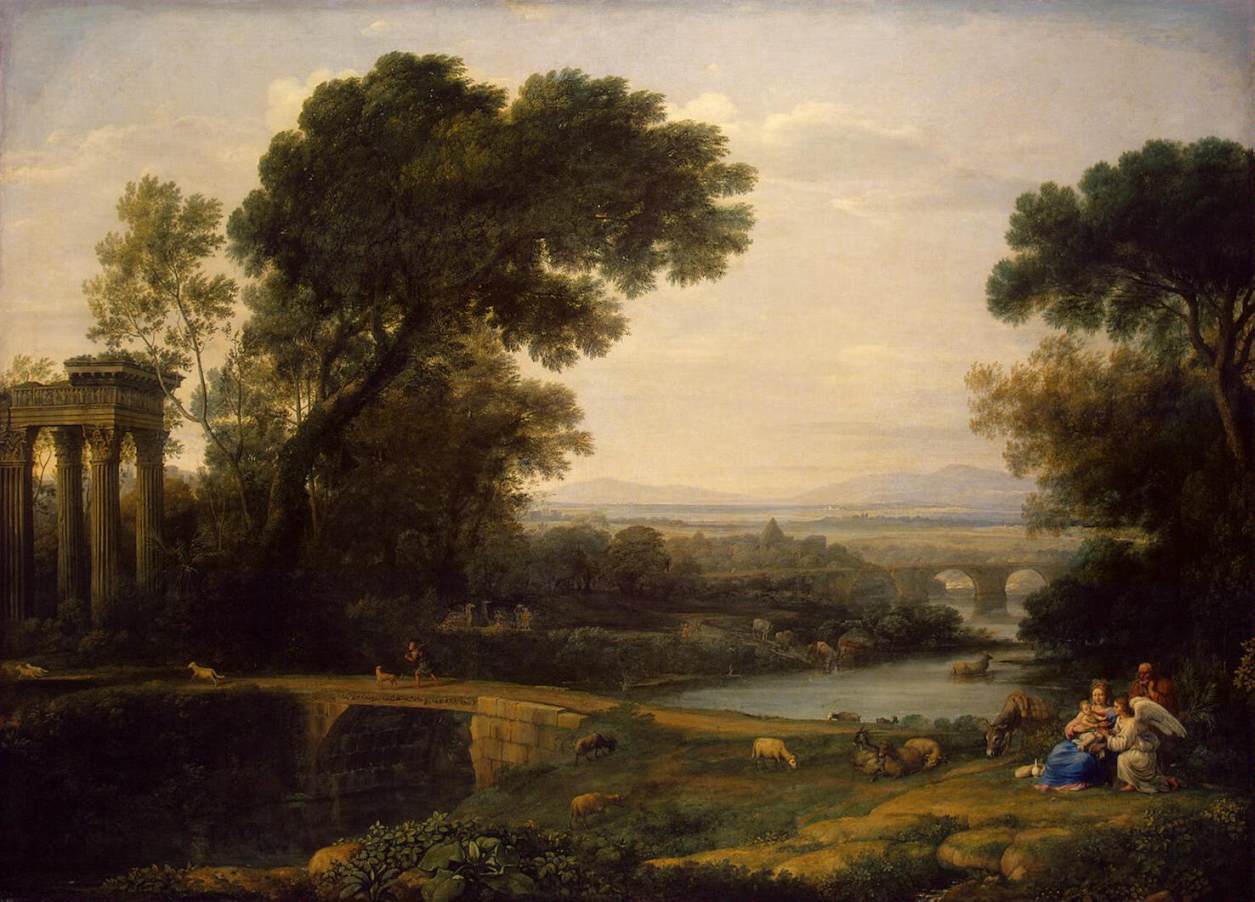
            William Kent was a proponent of the picturesque landscape. His most famous projects include Chiswick House in Chiswick, Rousham House in Oxfordshire, and Stowe House in Buckinghamshire. He combined art and nature to create classically inspired landscapes. His design is noted for closely representing the landscape paintings like those of French painters Claude Lorrain and Nicolas Poussin. He appealed to emotions and moods with his landscapes and idealized nature. He utilized soft lines and edges, classical temples, and “borrowed views,” in which he drew the eye into the landscape and natural landscape beyond. Although brilliant, Kent was known for being both unreliable and impractical.  He could create terrific 2D representations in plan but was not knowledgeable about how to turn these into actual designs. His purpose for designing was for profit and to create an idealized landscape. Kent’s style and inability to be practical contrast to both Brown and Bridgeman.
            Lancelot “Capability” Brown is potentially England’s most famous landscape designer. He designed numerous gardens and landscapes across the UK, but his most famous projects are Blenheim Palace in Oxfordshire and the Hampton Court gardens in Surrey. He began his career designing gardens for big estates but transitioned later in his career to designing massive landscapes. Rather than appealing to the classicism of earlier designers and landscapes, he used the nature of England as an inspiration. The function of his landscapes was for pleasure but also for profit. At both Stowe House and Blenheim Palace he sculpted and designed the landscapes to have large open spaces, trees, lakes, and water channels. The greatest irony of Brown’s designing career was that he was brilliantly subtle with his designs. It is for this reason that Sir Horace Walpole is noted for saying that Brown’s work will be forgotten because he copied nature so well that it does not look like the hand of man influenced the design.  Unlike Kent, Brown was practical and successfully implemented his designs on a massive scale.  
            Charles Bridgeman began by working on several ornate estates across England but his most famous work is on Stowe House in Buckinghamshire. Bridgeman has a unique style that combines traditional, transitional, and progressive styles. These are comprised of parterres, avenues, and lakes (traditional); garden buildings and lawn amphitheaters (transitional); and borrowed views, in which the eye is drawn into the manmade landscape and natural landscape beyond. Bridgeman’s most famous feature that he created is the ha-ha. He created this ditch when separating Kensington Gardens from Hyde Park for Queen Caroline. It is used as a natural separation that also usefully deters animals from going onto land. Thus, in a similar manner to Brown, Bridgeman was successfully able to implement his designs in landscapes – not just plans and ideas like Kent – and became known for his eclectic style and for the innovative landscape feature of the ha-ha that became used around the UK.

Here is a website that describes the history of the ha-ha, where the ha-ha is mentioned in literature, and where the ha-ha is utilized in gardens and landscapes across the UK.
Claude Lorrain's 1661 "Landscape with the Rest on The Flight into Egypt."  William Kent designed his landscapes with
this type of classical painting in mind to create an idealized, picturesque landscape.

The massive Blenheim Palace landscape by Lancelot "Capability"Brown. This landscape demonstrates the reason why Sir Horace Walpole noted that Brown’s work will be forgotten. Brown copied nature so well that it does not look like the hand of man influenced the design.
Case and point of the function of Charles Bridgeman's innovative ha-ha feature for gardens. It is used as a natural ditch that separates land and also usefully deters animals from going onto land.


Wednesday, March 18, 2015

Divinity, Power, and Prestige - The Versailles Palace and Gardens

Julián Huertas
19 March 2015
Professor Musgrave
Garden Art in European History

Blog Post Five:
Without simply repeating the lecture notes explain why Versailles Palace and Gardens were built, and the role they played during the rule of King Louis XIV.

            The Versailles Palace and Gardens as we know today began in the 1660s when Louis XIV ordered for the remodeling of the former hunting lodge of his father. The construction occurred throughout the rest of the century to produce a monumental, majestic display of power and greatness. In this blog post, I will analyze the three primary reasons why the palace and gardens were built and the role they played during the rule of King Louis, who was in rule from 1643 to 1715.
            The first reason for the design and construction of the Palace and Gardens of Versailles was for Louis to display the divinity, power, and prestige of himself. Louis believed in the divine right of kings. In short, he believed that God crowned him as the King of France and that he himself was divine. Thus, a massive palace and gardens unlike any other in history would display his divinity to France and the rest of Europe. As European power was volatile at the time, it was important for any monarch or king to assert his strength and power. The palace and gardens were a physical and aesthetic way to do this. How Louis related this to the political and social dynamic of France leads to the second point.
            The second reason for the design and construction of the Palace and Gardens of Versailles was for Louis to consolidate power away from the royals and nobility of France.  Ever since The Fronde, the civil wars in France from 1648 to 1653, Louis XIV had been skeptical about the royals and nobility in France. He did not trust them and feared they would mutiny for power of France. Thus, Louis made Versaille the seat of government. Not only was Versaille splendid and ornate, but it was also located outside of Paris. By having all royals and noblemen live at the palace, Louis consolidated his kingly power and wealth. He provided housing, food, and entertainment to the noblemen to keep them happy and satisfied. As a result, Versaille was a palace and gardens of control – a gilded cage. Louis XIV could look over all noblemen and, thus, maintain his power.
            The third reason for the design and construction of the Palace and Gardens of Versailles was to represent the power and greatness of France itself.  As mentioned above, the palace and gardens displayed the divinity, power, and prestige of Louis XIV but it was additionally significant for the country as a whole. Everybody in France and the rest of Europe would understand that France was a divine kingdom.  Louis made his claim that France was the most grand, ornate, and powerful country in Europe and the world. The size, scale, and ornate features of the gardens were so influential that they impacted garden design throughout Europe, such as in Spain, Portugal, England, Germany, and Austria.  This influence represents the significant impact France had across Europe in regard to garden design.

Here is a link for a website with cool and quirky facts about the Palace and Gardens of Versaille.

Louis XIV, the Sun King himself in all his glory.
The Palace and Gardens of Versaille in 1623 when it was a hunting lodge.
The Palace and Gardens of Versaille after its final design and construction. The palace and gardens combined are absolutely massive. It is 1.7 km long and 67,000 square meters total!

Wednesday, March 11, 2015

As Europe Began its Period of Colonization, Was There an Indigenous American and Caribbean Influence on European Garden Design?


Julián Huertas
11 March 2015
Professor Musgrave
Garden Art in European History

Blog Post Four:
In light of what we have so far studied, compose and answer your own question.
---
As Europe began to colonize American and Caribbean territories at the end of the 15th century, did the cultures within these different territories and their relationship to nature affect European garden design?

            Most of the material we have studied thus far has been Euro-centric. This makes sense as our class is about European garden history, but European colonization of American and Caribbean territories began at the end of the 15th century.  The cultures of these territories have similar and different relationships to nature.  I am wondering if European colonization of these territories affected European garden design. This may be a topic we cover later in the course with more information, but I feel it is appropriate to ask and examine this question now.
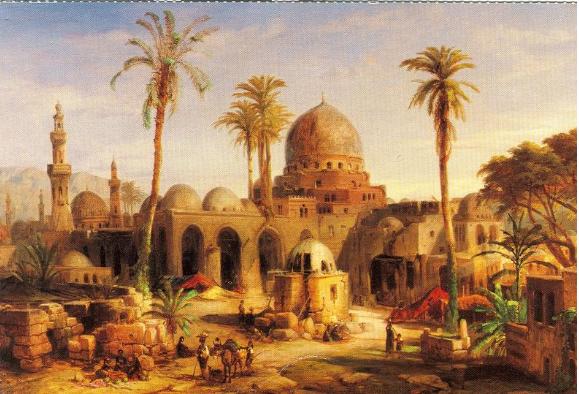
            When analyzing Islamic garden design, we touched upon how Middle Eastern influences came over to Europe in the form of design and knowledge. The House of Baghdad (also known as the House of Wisdom) was the intellectual center of the Middle East, if not the world, until its destruction in the mid-thirteenth century. Scholars there made advances in the science, mathematics, and geography, and this knowledge was fundamental for European society and scholars.  The Spice Trade was also active during this time. Spain and Portugal were primary importers of different spices and products from Asian countries and territories. Thus, there is an important influence in Europe from outside regions – the Middle East and Asia – during this time.
            During this point in time in the Americas, indigenous tribes had both similar and different relationships to nature as compared to Europeans.  Many indigenous tribes in the Americas – current Canada, North America, Central America, and South America – had (and some still have) animism and shamanism as religions. In general, these religions view nature as directly related to the spiritual world.  Plants and animals have souls and consciousness and, thus, are holy. Indigenous tribes live and identify with nature. Although animism and shamanism were not major religions in Europe during this time, the idea of holiness within nature is not foreign to Europe. As we have seen, religion is of primary importance in European garden design. Blog Post Two examines how gardens played a role in Roman, Mediæval and Muslim religions.  Blog Post Three additionally examines how the Renaissance spirit and Humanist ways of thinking influenced the idea of a divine order in nature and gardens.
            This blog post does not attempt to answer if American and Caribbean territories and their relationships to nature affected European garden design.  Rather, it shows how the influence in Europe of outside territories was fundamental and analyzes the similar and different aspects of indigenous American and Caribbean relationships to nature as compared to Europe. This blog post does not attempt to answer the question because have not covered this aspect yet in class and also this may be a topic that has not been significantly enough researched to reach a definitive finding.  If not, do you think there are ways to carry out research that could answer this question? Or is this a topic that will remain merely speculative?

Here is a website/paper that discusses indigenous tribe animism in great depth.

The House of Baghdad (also known as the House of Wisdom). It was the intellectual center of the Middle East, if not the world.

This is a map of the Spice Trade and Silk Road. This trade between the East and West was vital in allowing for knowledge to spread and new products to be imported and exported.
A graphic that illustrates the religion of animism and the concept of nature being directly related to the spiritual world. Plants and animals have souls and consciousness and, thus, are holy.  Indigenous tribes live and identify with nature.

Friday, February 27, 2015

Renaissance and Humanist Concepts as Employed in Italian Renaissance Gardens


Julián Huertas
27 February 2015
Professor Musgrave
Garden Art in European History

Blog Post Three:
Explain, with examples, the ways in which the Renaissance spirit of a rediscovery of the classics and the new Humanist ways of thinking were expressed in the design and content of the Italian Renaissance garden.

            The Renaissance spirit of rediscovery of the classics and new Humanist ways of thinking expressed itself in garden design, form, and content of Italian Renaissance gardens can be expressed with two primary examples.  These are the gardens of the Villa Medici in Fiesole, Italy and of Villa d’Este in Tivoli, Italy.  The Humanist ways of thinking led to the view of humans as rational and sentient beings. Individuals had the ability to decide and think for the self instead of God having absolute control. Religion was still a very important part of life, but the concepts and philosophy were on the values and importance of human matters. The additional interest in the classics led to a focus on mathematical precision. This demonstrated the ability of man to use the natural order of nature and improve upon it.
            The  gardens at Villa Medici are constructed using ratios and proportions for the design and form of the garden. The west front of the garden is open, which provides an open view of the Arno Valley and city of Florence. The lower garden is cut into the hillside so that it does detract from this view. These types of concepts echoed those of Leon Battista Alberti’s De Re Aedificatoria. He said a villa should be a place to be looked at and looked from. The villa should be set above the garden, gazing down into its own gardens and overlooking its countryside. This created relationship between the garden and architecture took the garden outside of the building. This is quite unlike the Mediæval cloisters, in which the garden was secluded within the Abbey grounds. Thus, using classical ratios and proportions and Alberti’s theories, humans were able to tame and manipulate nature to create new forms of garden design.
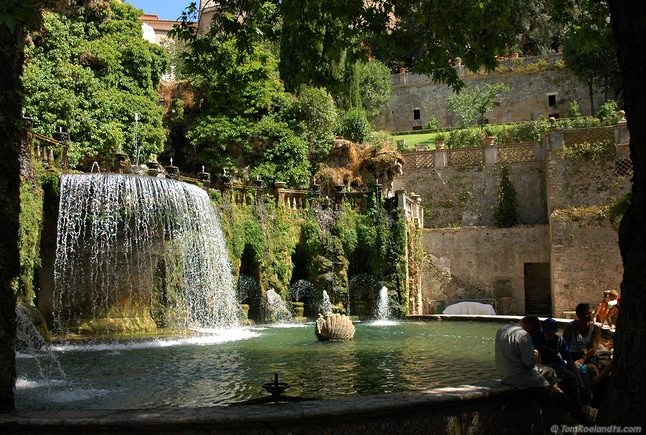
            The gardens at Villa d’Este are similar to those of Villa Medici in that they reference classical ratios and proportions.  The axial alignment of the garden creates symmetry and the terraces create open spaces through which to circulate and navigate through the garden. There are ornate water channels, fountains, plants, and sculpture. Water, plants, and stone are all raw materials of nature, and, thus, these decorations reference the human ability to improving upon nature to create a complex, organized garden design.
            These Renaissance spirit and Humanist ways of thinking questions how garden spaces are contemporarily designed and manipulated to this day. A theme popular in modern design is that of “vertical gardens” or “living gardens.” These types of gardens are mounted on walls in varying sizes. Hoses generally run behind the plants and easily allow for watering without being seen. This concept illustrates to an extreme the ability of humans to alter nature’s raw materials and improve upon garden design.

Here is a link for how vertical gardens work, their benefits and are incorporate into small, compact spaces.


Picture of Villa Medici’s gardens. Note the proportions and the view of the garden below and view of the valley and city.


Picture of Villa d’Este's garden. Note the ornate water channels, fountains, plants, and sculpture.


Picture of a massive “vertical garden.” This is an extreme, impressive example of altering raw natural materials and placing them in an urban setting.

Thursday, February 19, 2015

The Role of the Garden in Celebrating Religion in Roman, Mediæval, and Muslim Cultures


Julián Huertas
19 February 2015
Professor Musgrave
Garden Art in European History

Blog Post Two:
In the three cultures we have so far studied – Roman, Mediæval and Muslim – how did/does the garden play a role in their respective religions?

            In Roman, Mediæval, and Muslim cultures, the garden has played a role in representing and celebrating the respective religions in similar and different ways. In this blog post, I will explore those similarities and differences.
            The garden in Roman culture served as a form of religious expression and incorporating of deities into human activities. Within Roman peristyle gardens, many of the fountains and statuary are of deities. Specific deities found in Roman gods would be Pomona and Venus. There were additionally various nymphaea, which were shrines to nymphs of the gardens.  Fresco paintings on the side-walls of gardens additionally showed deities relaxing in or performing activities in the gardens themselves.
            Mediæval gardens that served religion were primarily monastic, as plebian gardens were utilitarian and royal/noble gardens were primarily orchards, parks, and/or herbers. Many of the mediæval gardens were cloisters, which heavily symbolized the purity of the Garden of Eden.  Many of the plants within these gardens symbolized aspects of the Virgin Mary. The white lily represented the virgin’s purity and the red rose symbolized the virgin’s birth of Christ. A smaller garden separate from the cloisters but within the abbey grounds was the hortus conclusus (“enclosed garden”). This was heavily sacred and usually locked. It was a quiet, private spot that was heavily ornamented.  These pure, sacred aspects of the garden appealed to the idea of the cloisters as the Garden of Eden.
            Muslim gardens represented religion as they directly referenced Islam as a faith. In its text, Qur’an gives a blueprint of the design of a garden. Specifically, there are over one-hundred and twenty references in the Qur’an to the jannah al-firdaws (“gardens of paradise”). In this sense, the garden should be like the “paradise” like that of the afterlife.  Specifically in regard to design, there should be a fourfold design (chahar bagh), water channels, a qanat irrigation system, central pool, and plane trees (chenar).  The four rills, small narrow water courses, represented the four rivers of life. It stimulated an individual’s own spiritual reflection in relation to self and to god. In this way, the Islamic garden should be an earthly and spiritual paradise.
All three religions similarly have gardens as central components to each respective faith. The differences, however, are that the Roman garden was less symbolic and referenced the many deities, whereas the mediæval gardens were heavily symbolic. Islamic gardens differed in that the sacred text of the Qur’an gave a blueprint for the design yet was similar in that it represented a spiritual paradise.

Here is a for the Metropolitan Museum of Art’s blog. Specifically, this link talks about the plant symbolism within Mediæval horti conclusi.


Roman garden fresco of a deity within a garden

A hortus conclusus in the Little Sparta garden in Dunsyre, Scotland

The charah bagh garden designed from the text of the Qur’an in an Islamic garden